Monday, November 05, 2018

Better Late Than Never

I should have made this decision months ago.  Perhaps years ago.  I can only attribute my inaction to my Irish heritage which stereotypically enjoys a good argument.

What I refer to is the endless arguments with people on social media (anti-social, more like it) about a range of topics, but principally climate change.

Some call these people "climate change skeptics". I wouldn't be that kind.  Being skeptical is useful.  All good people of science are skeptical, accepting the conclusions of others only after examining the evidence, perhaps after trying to replicate experiments themselves.

My choice of term would be "climate change denier".  These people are in complete denial about almost everything that's happening in the environment, specifically as a result of our greenhouse gas emissions since the start of the Industrial Revolution.

Their arguments cover the gamut, from "it isn't happening", to "humans aren't causing it", to "the climate is always changing, this is nothing new", to "volcanoes give off more gases than humans do", to "Canada is carbon neutral"....but you get the idea, and I'm sure you've heard all of them, many times.

If you want to look at a more complete list of all the excuses climate change deniers make as they pretend nothing is happening, you can look here:  Most Used Climate Myths

Consequently, this is where we are now, decades after the problem was first observed and the first warning signs were apparent to those who were looking:

One point that's been made quite often recently is that it is nearly impossible to change people's point of view, especially when the new information challenges their world view.

So, as I alluded to earlier, I've made a decision.  I'm not going to bother engaging with such people.  People who haven't bothered to even become acquainted with the available information.  After all, it's not like convincing these people will actually change anything, right?  Efforts would be better expended lobbying politicians and businesses to make the changes that are necessary to our survival.

As for social media discussions, my tactic will be to simply block such people.  It's a waste of time arguing with them, they are impervious to facts and information, so I can't see the point in engaging with them and giving them the platform to repeat the same nonsense.  It's the 21st Century, after all. 


Should have done it months ago.


Tuesday, October 02, 2018

Recognizing the costs of Climate Change

It's something that quite a few businesses have been coming to grips with for some years now - the costs of Climate Change.

We hear constantly that either climate change is a hoax or that it's been changing for centuries and this is no different, or that doing anything about climate change will be too expensive or will cost jobs, and so on.

The reality is that many businesses have been dealing with the costs of climate change and know that it's only going to get worse.

This recent story lays out the issue - "Destructive weather prompting corporate rethink on ignoring costs of climate change"

If you read some of the comments, you will see that there is a lot of wishful thinking and a lack of understanding about economics and physics.  Not much new in those.


Saturday, September 22, 2018

A New Way of Displaying Hot

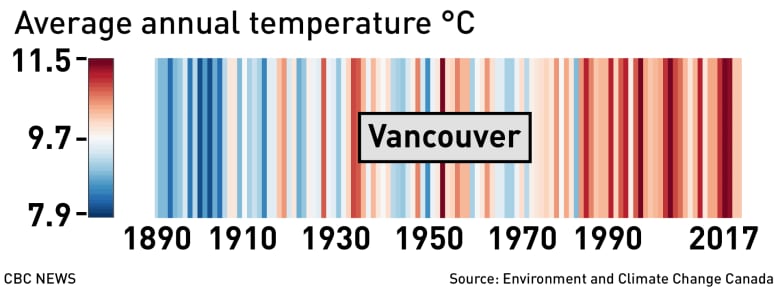
In the quest to find better ways to display climate data, a researcher in the UK has come up with "bar code charts".

The complete article can be found here.

The bar code charts look like this:


Each bar represents the average temperature for one year.  


Of interest are bar code graphs for more northern locations.  Average temperatures in those locations have been increasing more rapidly than further south.

Thursday, June 28, 2018

A Bit About Trade

Most of the developed world seems to be at each other's metaphorical throats over trade.  Who has the surplus, who might be "taking advantage" of whom....

One respected business publication, Bloomberg, writes about "The $1.4 Trillion "Surplus" That Trump Isn't Talking About".  In a nutshell, the article argues that the USA does not have an overall deficit in trade with China, for example.
  "U.S. companies have sold more to the rest of the world than other countries have sold to the U.S. in the past ten years," writes chief China economist Zhang Zhiwei in the report.
Other economists argue that Trump is factually incorrect in his Twitter trade tirades, in this case against Canada.  
Derek Holt, vice-president of Scotiabank Economics, said the "thought processes" at the core of the U.S. administration are not grounded in "reason, diplomacy or facts."
Milk seems to be a particularly touchy point for Trump, even though Canada's supply management system is one that many American dairy farmers which they had.


The Guardian ran an article about the milk issue recently: Why Canadian Milk Infuriates Donald Trump. 
Trump’s latest trade war target is Canada’s protected dairy industry. But Canadians have no intention of abandoning it – because it works

Occasionally there are those who try to use humour (or humor, in this case) to describe the currrent situation.  The Washington Post recently published an opinion piece titled: "Finally, A president with the guts to stand up to Canada" 

O Canada: You had it coming, eh.
They inflicted Nickelback on us. We did nothing.
They sent us Justin Bieber. We turned the other cheek.
They were responsible for one abomination after the other: Poutine. Diphthong vowels. Hawaiian pizza. Instant mashed potatoes. Ted Cruz.
Still, we did not retaliate — until now.

How Capitalism Works - one more view

Appearing in The Guardian recently, this review of yet another book on Capitalism, which the authors refer to as a ruinous economic system that benefits a minority class.

A History of the World in Seven Cheap Things, by Patel & Moore

Patel and Moore’s essential argument is that the history of capitalism, and therefore of our current mess, can be usefully viewed through the lens of cheapness. (An earlier, more knottily theoretical work of eco-Marxism by Moore, Capitalism in the Web of Life, argues that “cheap nature” is as central an imperative of capitalism as cheap labour.) The seven “things” of their misleadingly clickbaity title are not objects or consumer products, so much as conceptual categories: nature, money, work, care, food, energy and lives. 

More grist for the mill. 

Tuesday, March 13, 2018

Orwellian Logic - Alive and Well in Canada


Although there are a large number of tired old arguments that are trotted out denying human-caused climate change and insisting that there's nothing we can do about it, empirical evidence clearly shows otherwise.


For more information about such denial claims, there is this: Denial Claims.

With the silliness between Alberta and BC over the Kinder Morgan pipeline expansion, the issue of climate change mostly remains in the background.  Terms like "national interest" and "jobs" dominate the headlines, but the impacts of more tar sands expansion on our changing climate are avoided.  

In fact, the current Liberal Government's decision to give the Kinder Morgan project the green light is in direct opposition to what we need to be doing to deal with Climate Change.


One author who has been involved in this issue for many years has called this Orwellian Logic.

Trudeau's Orwellian Logic: We Reduce Emissions by Increasing Them

There are very few economic arguments that make such an expansion a good idea.  This article examines the main arguments.

In another article that appeared in The Tyee recently: Only Fantasies, Desperation and Wishful Thinking Keep Pipeline Plans Alive.

Just as one example of what often happens when the oil industry is finished with their pillage is described in this story.  You'd think Alberta would want to clean up its own mess before passing the potential of even more on to other provinces.


Here in BC, we don't want another pipeline and more tanker traffic.  It's not needed, it's not in the national interest and only makes our current problems worse.